
There is a version of character development that most drama students encounter early: the idea that building a character means deciding on an accent, a walk, a set of mannerisms, and a backstory, and then deploying these consistently throughout a performance. This approach is not worthless — physical specificity matters, and backstory can be useful — but when it becomes the primary method, it tends to produce performances that feel like demonstrations rather than people.
The word character, in the context of acting, is doing several kinds of work at once. It refers to the dramatic person being played — the character as written, with their circumstances and history. It also refers to the actor's embodiment of that person — the living, breathing, responding performance of them. And it sometimes refers to a particular quality of personality — what we mean when we say someone "has character." Understanding the relationship between these different uses clarifies what character development actually involves.
Character begins with want.
The most fundamental thing a character can have — the one thing without which no amount of physical or vocal specificity will produce a convincing performance — is a genuine want. A character who wants something, who has a specific and urgent reason for wanting it, and who acts from that wanting, is alive in a way that a character who is merely displaying traits is not.
This is not a new observation. Stanislavski made it central to his system in the early twentieth century. The concept of the "super-objective" — the overarching want that drives a character through the whole play — and the more granular "objective" of any given scene or moment, are the core of the approach he developed. What is less often discussed is how difficult it actually is to identify and commit to a genuine objective, rather than a vague or general one.
The difference between "I want to be heard" and "I want this specific person to understand why I left" is enormous. The first is a category; the second is an action. The second version creates a specific relationship between two characters, generates behaviour that is responsive to what the other person does, and allows the actor to notice and respond to moments when the want is or is not being met. The first version produces general yearning, which is often the least interesting thing to watch.
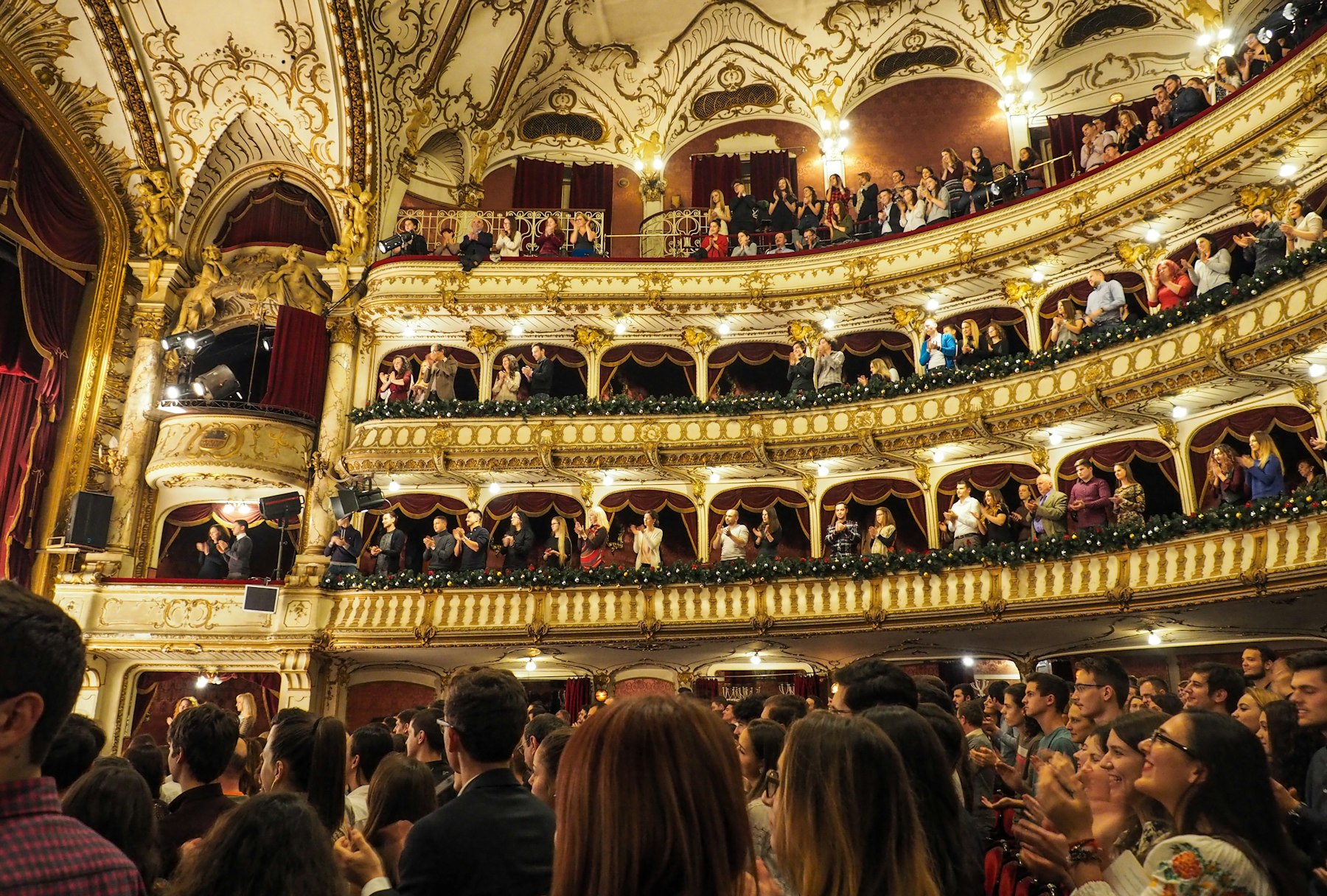
Given circumstances as the architecture of character.
The given circumstances of a scene are the established facts: who is present, where they are, when the scene is taking place, what has happened before it began, what the relationship between the characters is, and what broader situation they are operating within. These are the conditions that make a character's wants comprehensible — that explain why they want what they want, and what it means for them to get it or fail to get it.
Working carefully with given circumstances is one of the most distinctive things about the Stanislavski approach, and it is also one of the most consistently under-practised. It is common for student actors to rush past the given circumstances — to arrive at the scene with a general sense of who their character is and what the scene is about, without having done the slower, more patient work of understanding the specific conditions that the character is living in at this moment.
The playwright has laid these conditions out, usually with considerable care. Reading a scene with the question "what are all the facts I am given?" before asking "how should I play this?" is not a formula that guarantees good work, but it is a discipline that reveals how much is already in the text and how much is being imported from elsewhere. Most bad acting involves either too little attention to what the playwright has actually written, or too much imposition of interpretations that are not earned by close reading.
Physical choices and how they emerge.
The question of how a character moves, speaks, and carries themselves is real and important — but the timing of when to address it matters enormously. Many student actors make physical choices about a character before they understand the character's objectives and given circumstances. The result is that the physical choices are disconnected from any internal logic — they are applied rather than emerged.
Physical choices that emerge from genuine engagement with a character's situation tend to have a quality of necessity — they feel as though they could not really be otherwise, given who this person is and what they are living through. Physical choices that are applied tend to feel arbitrary, even when they are technically impressive. The audience senses the difference, even if they cannot articulate it.
This does not mean that physical work is secondary or that it should always come last. Some actors find that the physical approach opens the interior work in ways that purely analytical methods cannot. Working with an accent, a posture, or a specific physical habit can unlock a way of seeing the world that the actor had not otherwise accessed. The key is maintaining awareness of the relationship between the external choices and the internal logic — and being willing to interrogate physical choices that feel imposed rather than discovered.
Character in contemporary theatre.
Contemporary theatre has complicated the inherited model of character in ways that are genuinely interesting and sometimes genuinely confusing for actors. A significant portion of new writing does not feature characters in the traditional sense — fully individuated people with coherent histories, consistent motivations, and psychologically realistic behaviour. Instead, it may offer figures who represent ideas or social positions, characters whose interiority is deliberately withheld, or formal structures in which the concept of character is subjected to deliberate pressure.
This requires actors to be flexible about how they approach character work. The Stanislavski toolkit remains useful — even in highly abstract work, finding some version of want and situation gives the actor something to inhabit — but it needs to be applied with judgment about what the specific piece of writing demands.
The most useful principle is probably the most obvious: read carefully. The manner in which a playwright has written their characters contains a great deal of information about how they want them to be played. A character who speaks in long, periodic sentences has a different relationship to thought, emotion, and language than one who speaks in fragments. A character who never directly answers a question has a different interior logic than one who is always explicit. These things are in the text, waiting to be found.
The relationship between character and self.
One of the persistent questions in acting methodology is how much of the actor should be present in the character, and how much the actor should efface themselves in service of the role. This question does not have a single answer, and the more interesting approaches to acting have generally been those that refuse the opposition entirely.
The most practically useful version of this question might be: what does this character share with me, and how can I allow those connections to do real work? Finding the point of genuine meeting between the actor's own experience and the character's situation is not dishonest or self-indulgent. It is, arguably, the mechanism by which acting becomes something a human being can actually do rather than merely simulate.
The ability to find this meeting point — to use your own experience with loss, desire, conflict, or need without simply playing your own experience — is a sophisticated skill that develops slowly and often requires the guidance of a good instructor. It is also, when it works, what makes acting genuinely moving rather than merely accomplished.
On consistency and flexibility.
Character work in rehearsal often aims toward consistency — the progressive refinement of a set of choices that become more settled and reliable as the process continues. This is appropriate and necessary for structured work, particularly work that will be performed many times. But consistency should not be mistaken for rigidity.
The best performances retain a quality of genuine responsiveness — the character's responses are consistent because they arise from a stable internal logic, not because the actor has decided in advance what each moment will look like. This distinction is easy to state and difficult to maintain. The tendency, particularly under the pressure of performance, is to reproduce choices rather than to continue discovering them. Resisting this tendency is one of the ongoing technical challenges of acting.
A practical note for students.
Character work develops through the accumulation of specific, detailed choices — choices about what this person wants, where they have been, what they notice, how they speak, how they move, what they are afraid of and why. The accumulation of these specifics, when it is grounded in honest engagement with the text and the situation, eventually produces something that feels whole and real.
This wholeness is not achieved by trying to produce it directly. It arrives through the patient, unglamorous work of asking specific questions and answering them honestly. What does this person want right now? What would stop them from getting it? What are they not saying? What physical habit has this character developed in response to their specific life? These are the questions that, when taken seriously, eventually produce a character rather than a performance.